
The Missing Place

A category undesigned for twenty years.

It looks like a great place to work. Until you need to focus.

Scroll

The Drama

Work happens in the worst possible places.

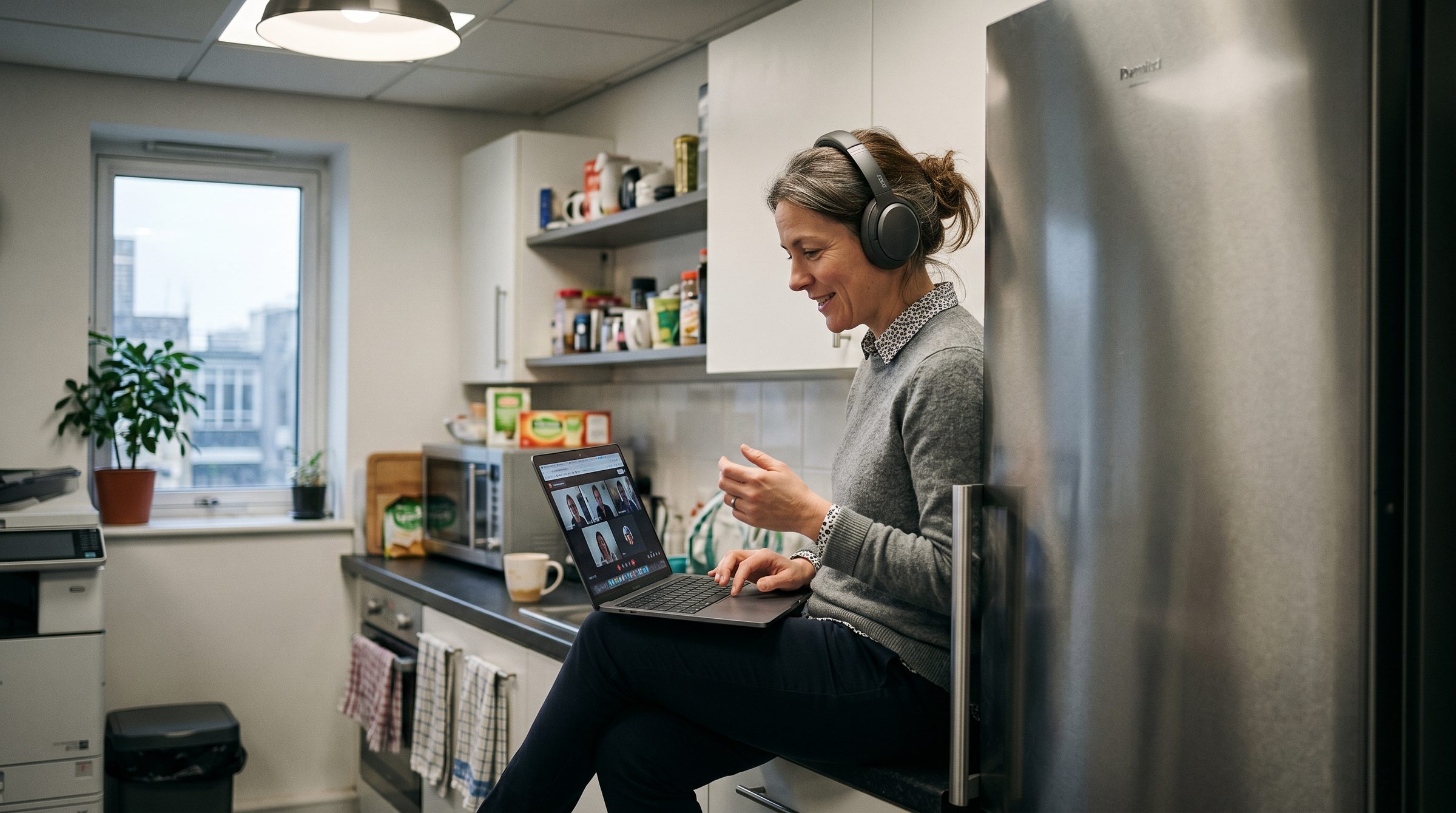
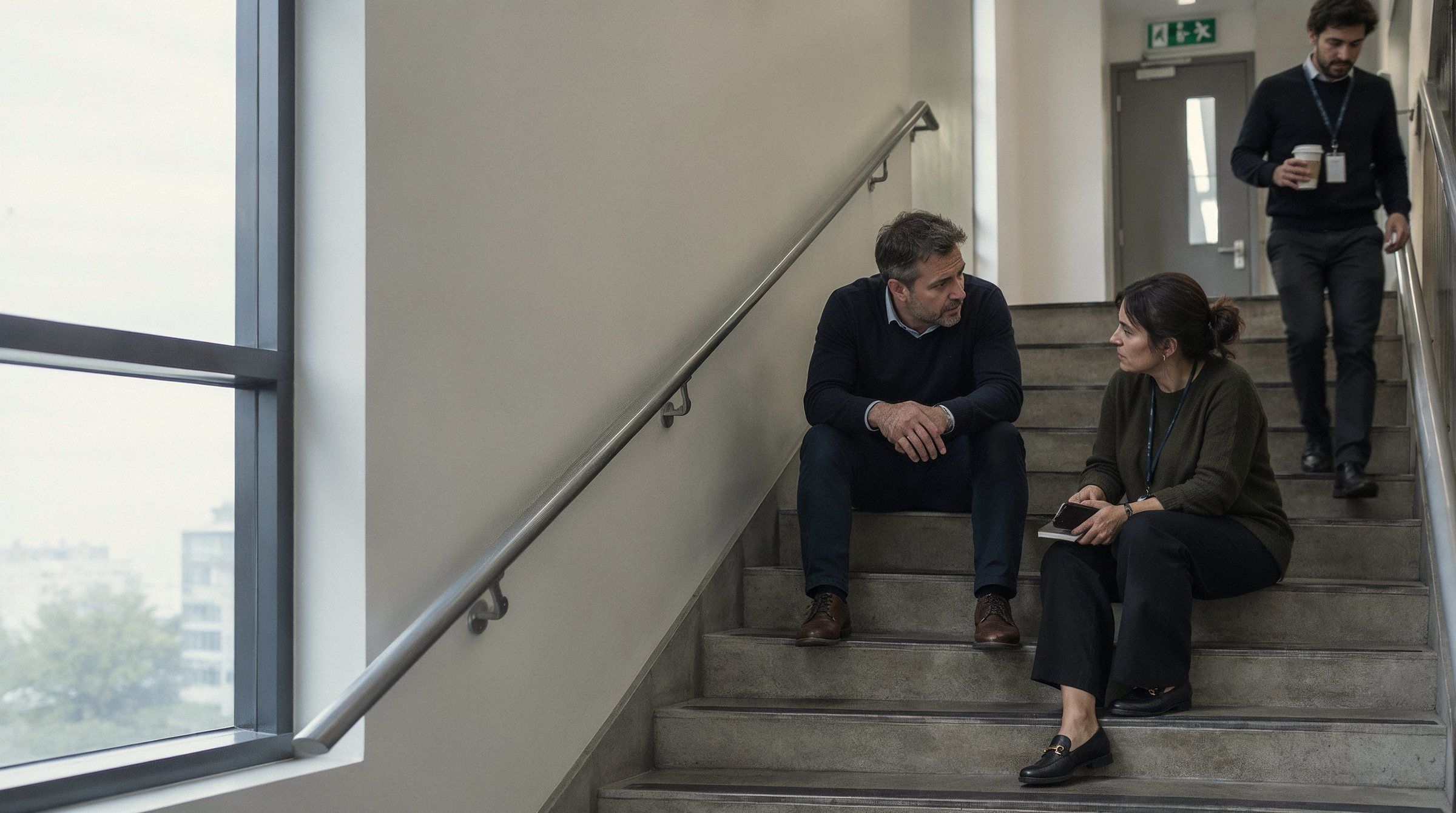
Four colleagues try to hold a sprint planning around the end of the office kitchen counter, a laptop and sticky notes between the mugs, while others reach past them for the kettle and the fridge A knowledge worker takes a video call from the corner of an office kitchen, headphones on, laptop on her knees, the wrongness of the setting visible around her Two colleagues hold a difficult one-to-one sitting on the stairs of the office stairwell while a third walks down past them with a coffee

You are the cognitive workforce of the modern company.The right places are needed
for the deep work of one, the interview between two,
the planning sprint for four,
the review of six where every voice should be heard.
Good work does not fit on a hot desk,
and it rarely happens around the water cooler.

01/03

The Cost

This is not the story of one person.
It is a measurable, structural cost.

The modern workplace absorbs this cost every day. The numbers come from independent research, not Calma.

−70%

The promise, tested

The open plan was created to foster collaboration. When Harvard researchers tracked two Fortune 500 companies through the move to open offices, face-to-face interaction fell by roughly 70%. As a result, people put on headphones and took the conversation online.

Bernstein & Turban, Philosophical Transactions of the Royal Society B, 2018 · two organizations, wearable sensors and server logs

2 min vs
23 min

The math

Microsoft’s 2025 telemetry found that its most interrupted fifth of users, by messages received, are interrupted every two minutes during core working hours: 275 times a day, by meetings, emails, or chats. Research led by Gloria Mark at UC Irvine puts the time to return to an interrupted task at about 23 minutes. The math does not work: deep focus does not happen at the open desk.

Microsoft Work Trend Index, 2025 · Gloria Mark, University of California, Irvine

1%

What remains

The share of office workers who can block out distractions and concentrate at their desk without extra steps in 2015 was around 20%. It collapsed by 95% in under a decade.

Oxford Economics · Plantronics Workplace Noise Study

65%

What people want

The share of office workers who want open environments for collaboration but enclosed spaces for focused work. This is the opposite of how most offices have been built over the last decade.

Gensler Global Workplace Survey, 2025

A knowledge worker in a darkening office in the late evening, headphones on, hand at her chin, mid-thought, lit by the cool light of her laptop screen, the city coming on beyond the window

What is needed

Most quick fixes don't last: a pair of headphones, a borrowed conference room, a sign on the desk. They get you through the day, not through the work.

A bad pod is worse than no pod. A good pod is physics, calibrated.

The Missing Place needs to be built. Engineered from human biology, for human intelligence. The right place exists when four elements are calibrated together, at the same time, in the same environment.

This place where the most important work could happen,
but currently does not, has a name.

Calma calls it

The Missing Place.

Eight Calma pods

From the Missing Place to the Right Place.

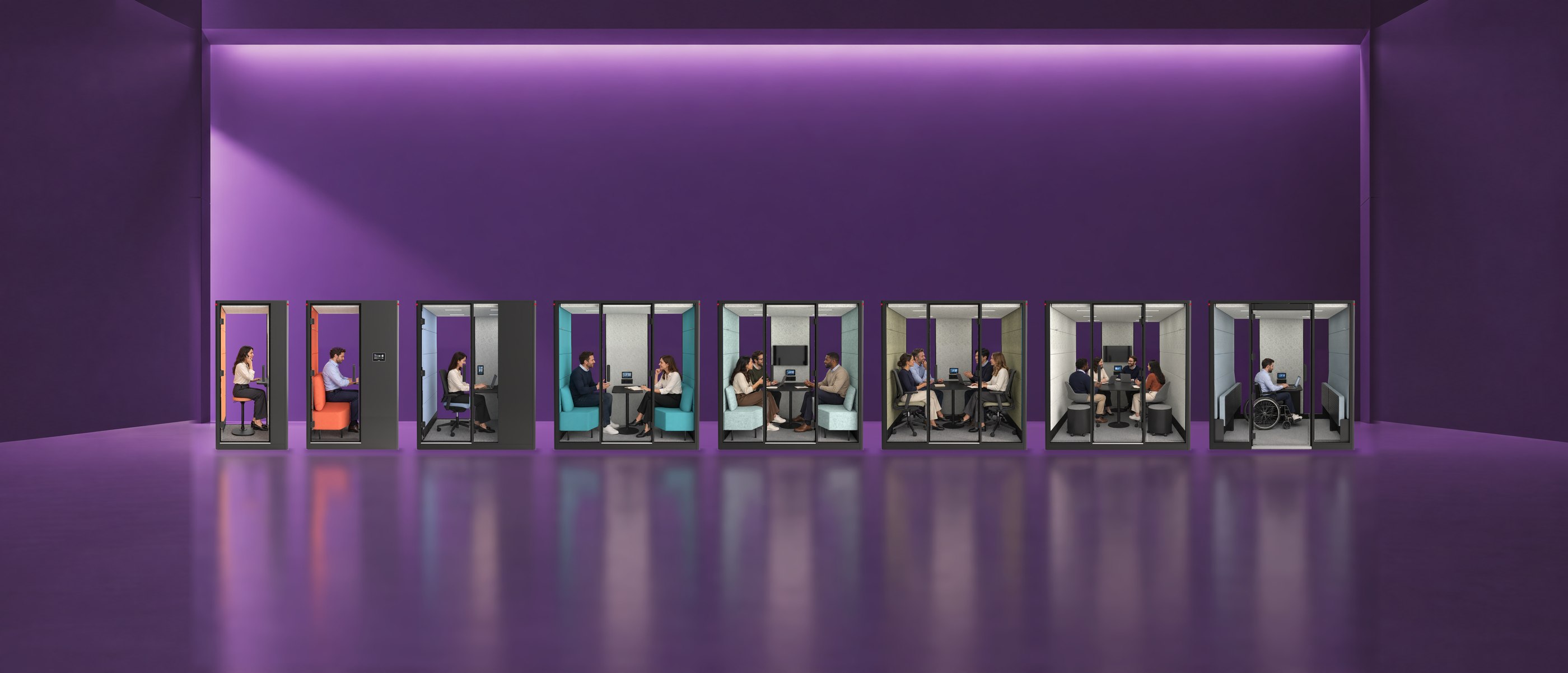
When the four elements are calibrated together, the Missing Place stops being missing. The interview happens at 10 a.m. instead of Saturday. The strategy gets written at the office, not the kitchen table. Eight Calma pods, sized to the work, from a solo hour to the whole team.

The eight Calma pod models lined up in a purple room